





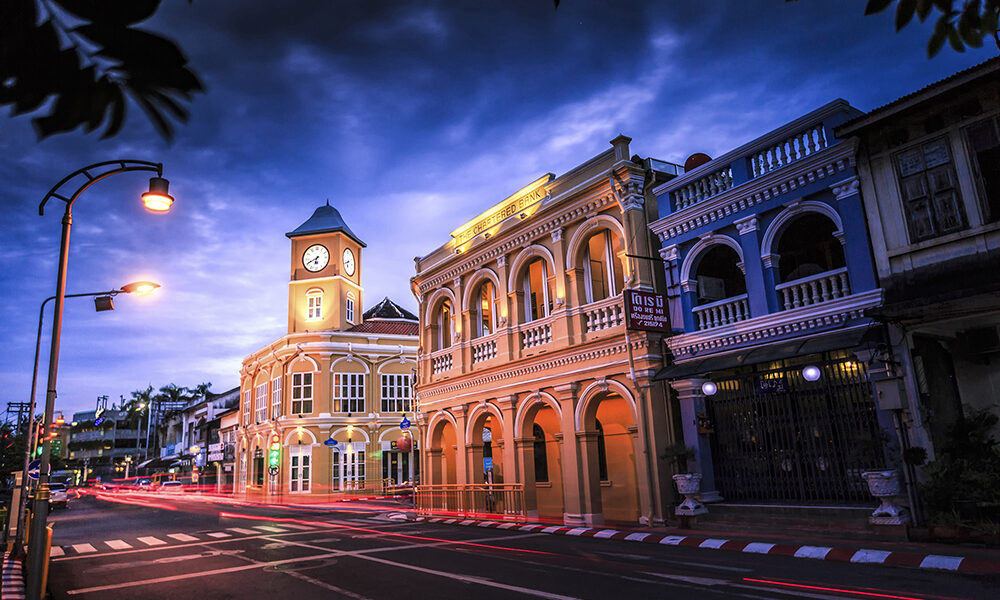
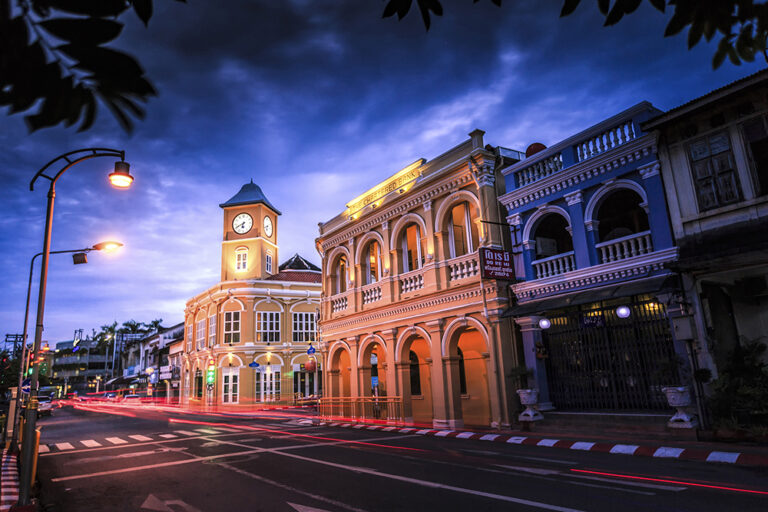
Away from the beaches, Phuket Town has a completely different character. Its old quarter is a maze of pastel Sino-Portuguese shophouses, Chinese shrines, cafés and street-food stalls that tell the story of the island’s tin-mining past.
A town built on tin
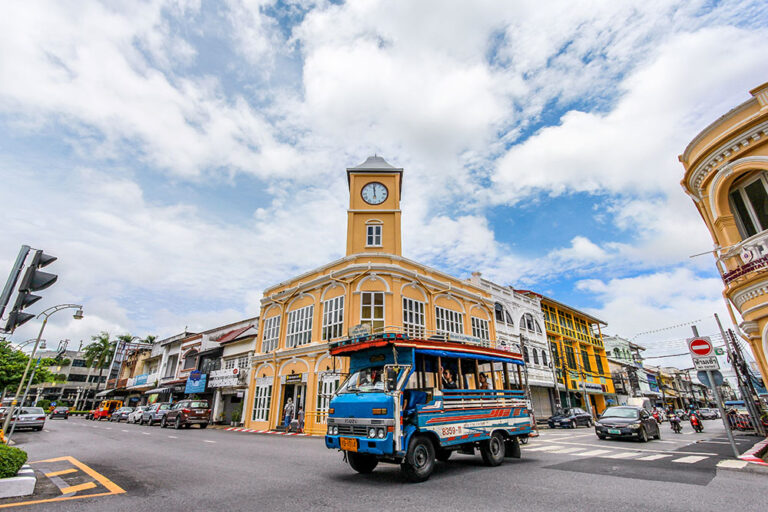
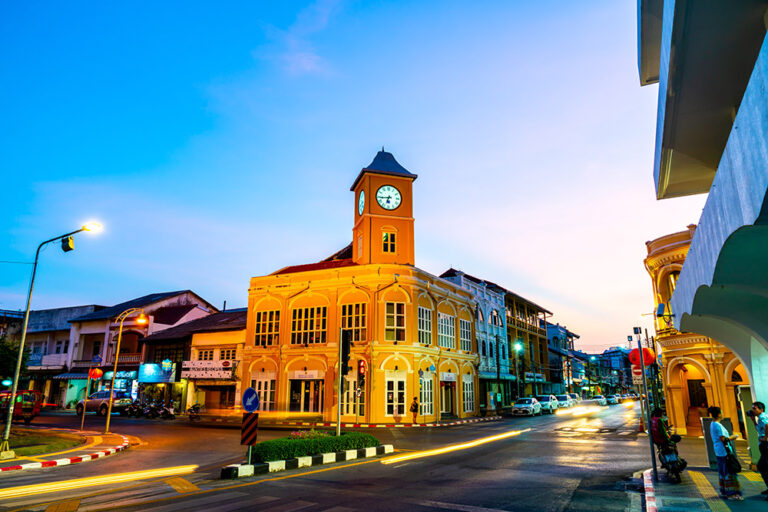
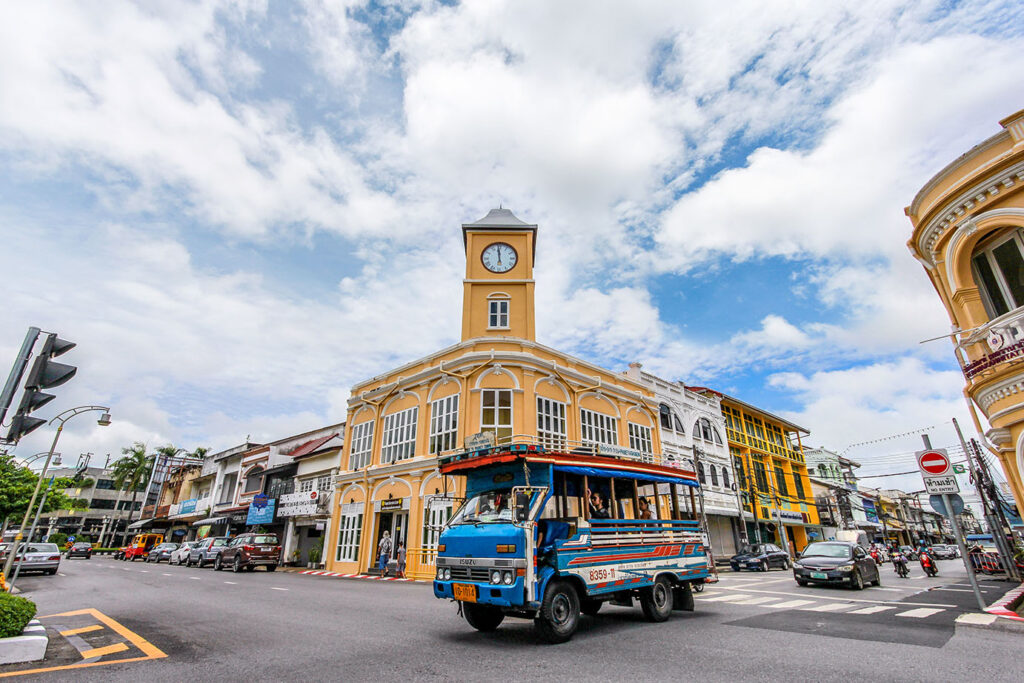
In the 19th century Phuket boomed thanks to tin mining, attracting merchants and workers from China and Malaya. Wealthy families built elegant shophouses mixing Chinese and European styles – today called Sino-Portuguese architecture. The mix of cultures also created Phuket’s Peranakan, or Baba, heritage, which you can still taste in the local food.
Streets to explore
- Thalang Road – the main street of the old town, lined with restored shophouses, shops and cafés.
- Soi Rommanee – a short, very photogenic lane of brightly painted houses.
- Dibuk and Krabi Roads – grand old mansions and quieter streets.
- Chinese shrines – colourful, incense-filled temples that come alive during the Vegetarian Festival.
What to eat
Try mee hokkien (yellow noodles with seafood), moo hong (slow-braised pork belly), oh tao (oyster and taro omelette) and a Phuket breakfast of dim sum with strong local coffee.
Combine it with Phuket’s landmarks
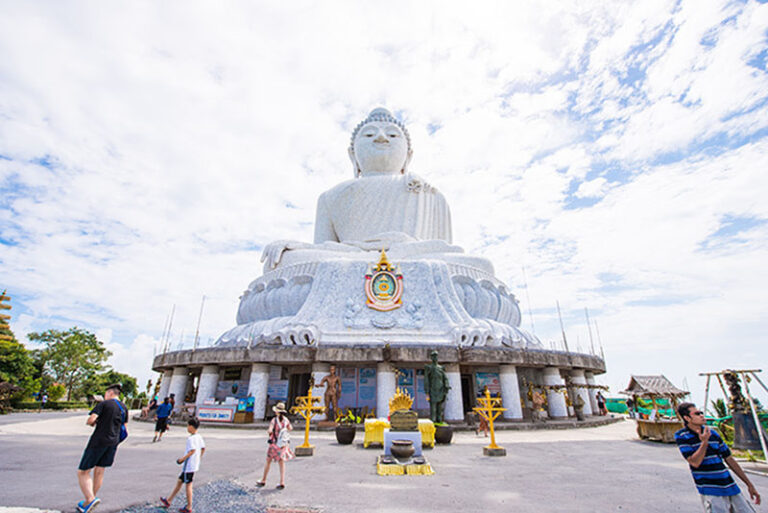
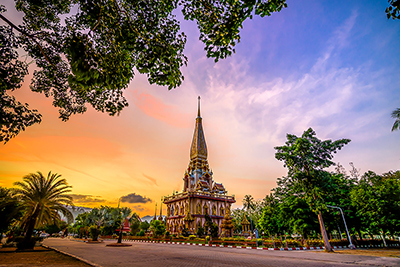
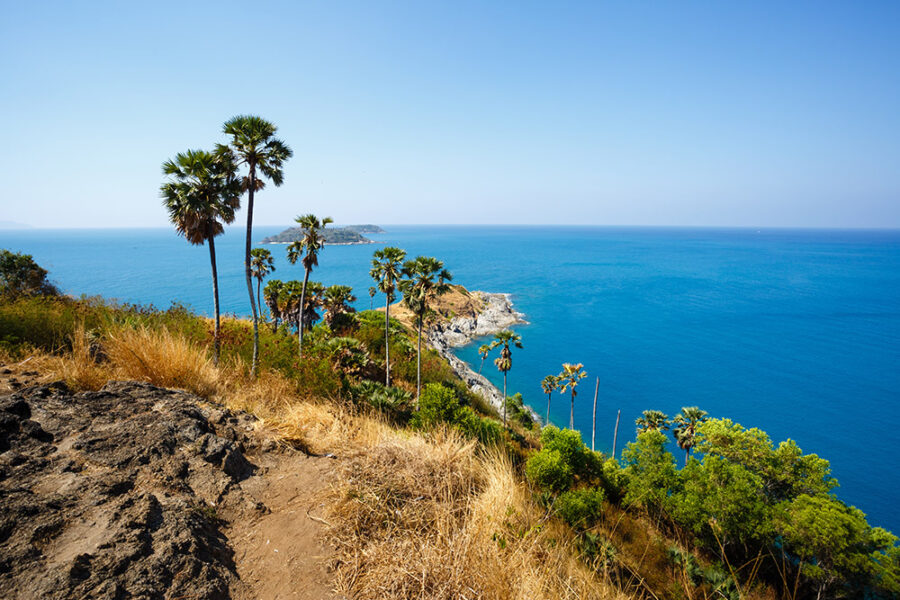
The old town pairs perfectly with the island’s other icons: the Big Buddha, Wat Chalong and the sunset at Promthep Cape. The easiest way to see them in one day is with a local guide.
Phuket City Tour (Full Day)
A relaxed full day around Phuket’s landmarks with a local guide